Monday, 21 October 2013

Second Focus Group

From the Left to the Right; Sam, Callum, Connor, Dean

 I got a Group of Punk-Rock fans together, to discuss my product designs and their opinions on them.


 Firstly, I asked their opinions on my Drafted Website Design. I was told that the imagery was clever, and attractive, with its bright and eye-catching colours, and interesting design. I was also told that the choice of background was great, and that the puppets were well done. However, they thought the signs were slightly too small, and that I should perhaps get larger ones for the final draft. I think this's a fair point- The sign seems to be too small, in some cases, to fully fit the text in. By enlarging the signs, I could make the content of the sign larger and more eye-catching. Another person said that they didn't like the font, nor the pink colour used for the text, as it seemed out of place to them, and it was also suggested a curtain be added, so I'm considering how I could photoshop one in.


 After talking about my website design, we turned our attention to my Digipak design. I was told that the style of it was good, and that I've used all the sides rather well, giving them all a Theatre-esque appearance. It was suggested that, rather than having on the Digipak information on the individual members of the band, I just have the Band bio, as the band may be of more importance than writing more personal Bios. It was also suggested that I should add in some stage spot-lights on the Digipaks Special Thanks page.

Saturday, 19 October 2013

Website second draft

I've created my website using Photoshop, to form a general idea of how it will look.
 
Home Page
I used a Puppet Booth for the background, the sort often used during puppet shows.
It's a familiar and recognisable scene for most-


Bio
 For the Navigation bar, I've used some Cardboard to the top of the booth, hanging from the top. This represents the DIY ethic popular in the punk-rock genre.
 As the top of the page, the band members are shown holding signs with their names on them. When clicked, the images will link to another page, which will have information concerning that particular band member. This represents each member as an individual with their own stories, background and personalities. This helps represent the Punk-Rock ideology of Individualism, that people should be independant and exercise their own goals in life.

News


Thursday, 17 October 2013

Audience Theory

In this post, I'll be discussing Audience theories.

The Effects Model/Hypodermic Model

 In the Effects Model, the Media text has an Influence or Effect on the audience when consumed, an influence usually considered Negative, which the audience is powerless to avoid. The power lies with the message of the text. This theory is also named the Hypodermic Theory because the message is Injected into the audience by the media, and the audience is powerless to resist it, like a drug- The audience becomes addicted, doped, duped.
 This was apparently proved through the Bobo Doll Experiment in 1961, where Children were made to watch a video of an adult violently attacking a toy clown, a Bobo Doll. The Children were taken to a room full of nice, attractive toys, but where told not to touch them. They were then taken to a room with toys, and a Bobo Doll. A video of the experiment can be found below.


 Most the children imitated the behaviour they had seen in the video. 
 The effects model is still a dominant theory with politicians, and some religious organisations in attributing violence  to the consumption of media.

Two-Step Flow

 This Theory suggests that a media source will pass information to an Opinion Leader. The Opinion leaders are influential, and similar to those they influence. They also pay close attention to the media and its messages. All groups have opinion leaders, whether it be a social group, a community, an occupational group, etc. There are Two types of Opinion Leaders- Monomorphic, meaning they are influential in a single topic, or Polymorphic, meaning they have an influence on a wider range of topics. The opinion leaders will pass the information they gain from the media, along with their own interpretation, to others who look up to the Opinion Leader, and who aren't so informed by the Media.

Uses and Gratifications

 This theory is basically the opposite of the Effects theory- Instead of the audience being Passive and Powerless, the Audience is Active and uses the text, rather than the text using them. It shifts the emphasis from what the media does to people, to what people do with the media. The text is used for the audiences Gratification, and Pleasure. The Power lies with the audience, not the producers, and they can use, reject or Play with the media text's message as they please. The theory suggests that, rather than encouraging violence, the Media can help the audience act out their violent impulses through the consumption of the media, making them less likely to commit violent acts in real life.
 Audiences seek to use the media to gratify for Diversion, Escapism, pleasure, Information, Comparing lifestyles and relationships with their own, and for Sexual stimulation.

Reception Theory

 This theory suggests that when a producer creates a text, the encode it with an intended message. The audience sometimes decodes the message correctly, and gets what the producer is trying to say. In other cases, the message will be incorrectly decoded, and the consumer will get the wrong message, or the message will simply be rejected. The meaning is interpreted based on their own individual cultural background and life experiences, 
There are considered to be Three types of audience readings of the text;

-Dominant/Preferred- The audience decodes the message correctly, and broadly agrees with it. 
-Negotiated- The audience accepts, rejects or refines elements of the text in light of previously held views.
-Oppositional- The dominant meaning of the text is recognised, yet rejected due to cultural, political or ideological reasons. 

Tuesday, 8 October 2013

Star Image

 Although the words "Pop Performer" and "Pop Star" have become interchangeable, they are not the same in media terms- Pop stars have  an persona or Identity which is not restricted to their musicianship. A star has an image which becomes a readily recognised sign used in many forms of media. Richard Dyer Said that stars are images, and not real people, constructed as with any other aspect of fiction out of a range of materials. They're made and shaped to appeal to audiences, to generate revenue for record companies.
 Stars will often represent shared cultural values and attitudes, and promote particular ideologies. A star's "Star Quality" is enhanced depending on the audience's interest in these values. They provide audiences with ideas of what people are meant to be like- How to act, look, etc.
 
 A Star Image Motif is something reoccurring throughout an artist's work, in order to create a brand. A Motif could be an Icon, an Image, perhaps a Font.


 Let us use, for example, Less Than Jake, a Ska/Punk Band. Above is two album covers, and a poster. All of them have a very colourful, cartoon-y style, which spreads across the majority of their products and merchandise. It also often uses the same colours and same font for the title of the band, shown below. 
This makes the band's style more recognisable, as it's plastered across all their media forms. They also usually use their logo on some of their products, in the same way. A similar design (a man holding a figure) is also used for the above poster, although it's been played around with.


And in other merchandise, they just use the fist from the logo, with the figure inside. It's still recognisable, and has the band's name on the front. T-Shirts and merchantdise is a fantastic way of getting publicity for a band.


 Here's another little example


Monday, 7 October 2013

Looking at other band's Logos

Before I decide on a logo to use for my band, I want to look at other bands logos, to help give me inspiration.


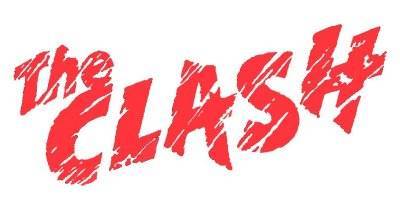
 Above are the logos of three British Punk Rock bands- the Sex pistols, The Clash and Guns n' Wankers. They're all very simple- Just the title of the band in a particular font. One of the things that leaped out at me at first glance was how similar the Sex Pistols' and the Guns n' Wankers' logos are. They're both made to look as if they've been made from paper cuttings of letters- As if somebody used a newspaper to cut out the letters, and assemble them as the words they wish to use. Again, this gives it a very hand-done look, which is relevant to the DIY Ethic popular with Punks. Guns n' Wankers have definitely gotten a lot of inspirations out of the Sex Pistols' logo- It's as if they're trying to mimic it. It helps make the audience recognise the band as being of the same genre, and shows it is catering to the same audience. By using a similar style of design, it's making the audience familiar with the type of band it is. Even people who've never heard of the band before can guess what it'll be like.
 British Punk Rock bands tend to use simple colour schemes, with their simple logos. Usually, they seem to go with Black, White, and occassionally Red. Red, of course, has connotatiosn


 Above are the logos of three American Punk Rock bands- Less than Jake, the Offspring and The Ramones. American Punk Rock Seems to have a tendency to go more towards Image-based Logos. They also generally feature little colour, simply being black or White, and go for a design more comparable to a stamp of some sort. 


 I experimented with the design of my own logo, to see what I could come up with.


1) To start me off, I decided to try a drawing of a hand, just to see where it would get me. Originally, I planned to have it holding scissors, but that seemed a little complex for a logo. I decided to try a more simple design, which would perhaps be more recognisable. 


2) A Slightly simpler idea, this is a pair of scissors "Cutting strings". This was meant to symbolise the freeing of something, or someone. This ties into the general message my brand is trying to portray, that we're puppets to society, that a "Puppet Master" is pulling the strings, and that we should free ourselves fro these strings. 


3) I simply drew a pair of scissors for this design. I decided to take inspiration from some of the other Punk-Rock logo designs, and give this logo a stamp-like look. This design's more simple, and is easily recognisable. 


4) This one's a more literal demonstration of the message I'm trying to portray, actually showing the strings of a puppet being cut with a pair of scissors.